Oct 13, 2026
What are the key features to look for in a professional three-deck gas oven?
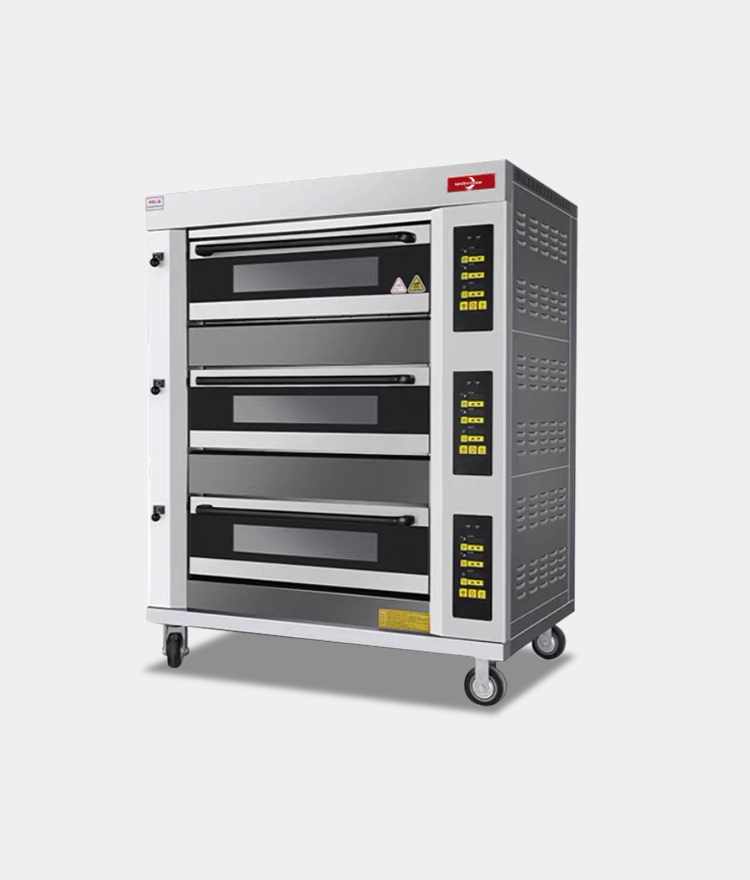
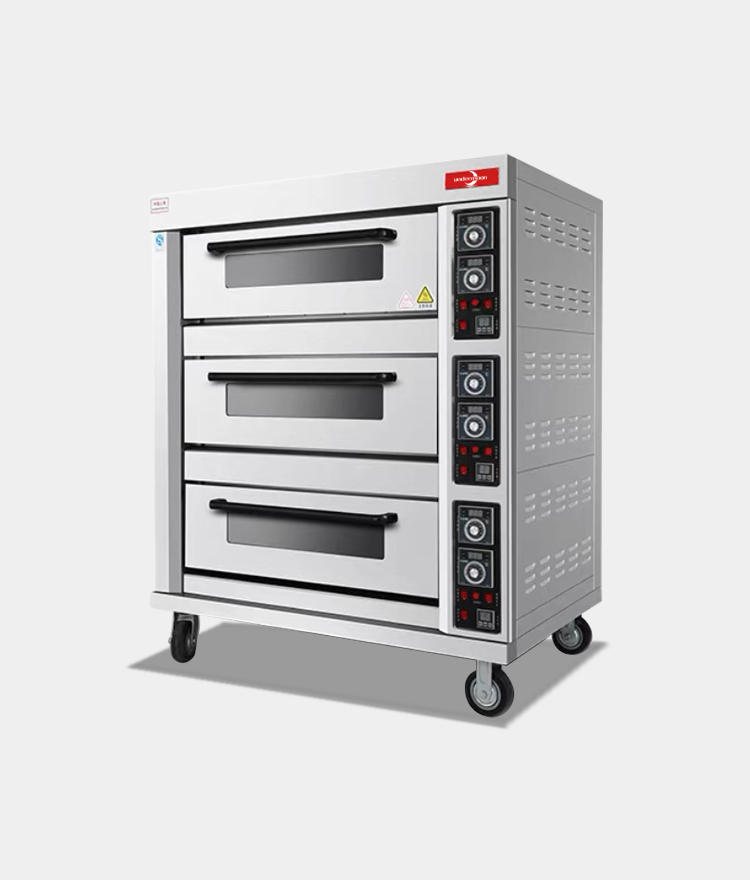
Procurement managers should look for precise temperature control, long-lasting stainless steel construction, and separate deck operation when choosing a three-deck gas oven for professional bakery operations. A good industrial gas oven evenly distributes heat throughout all of its chambers, so it can be used to make a wide range of foods, from delicate pastries to crusty specialty breads. Being able to bake up to six full-size trays at the same time and keep the temperature accurate to within ±5°C makes sure that the products are all the same and increases output in high-volume settings.send inquiry.
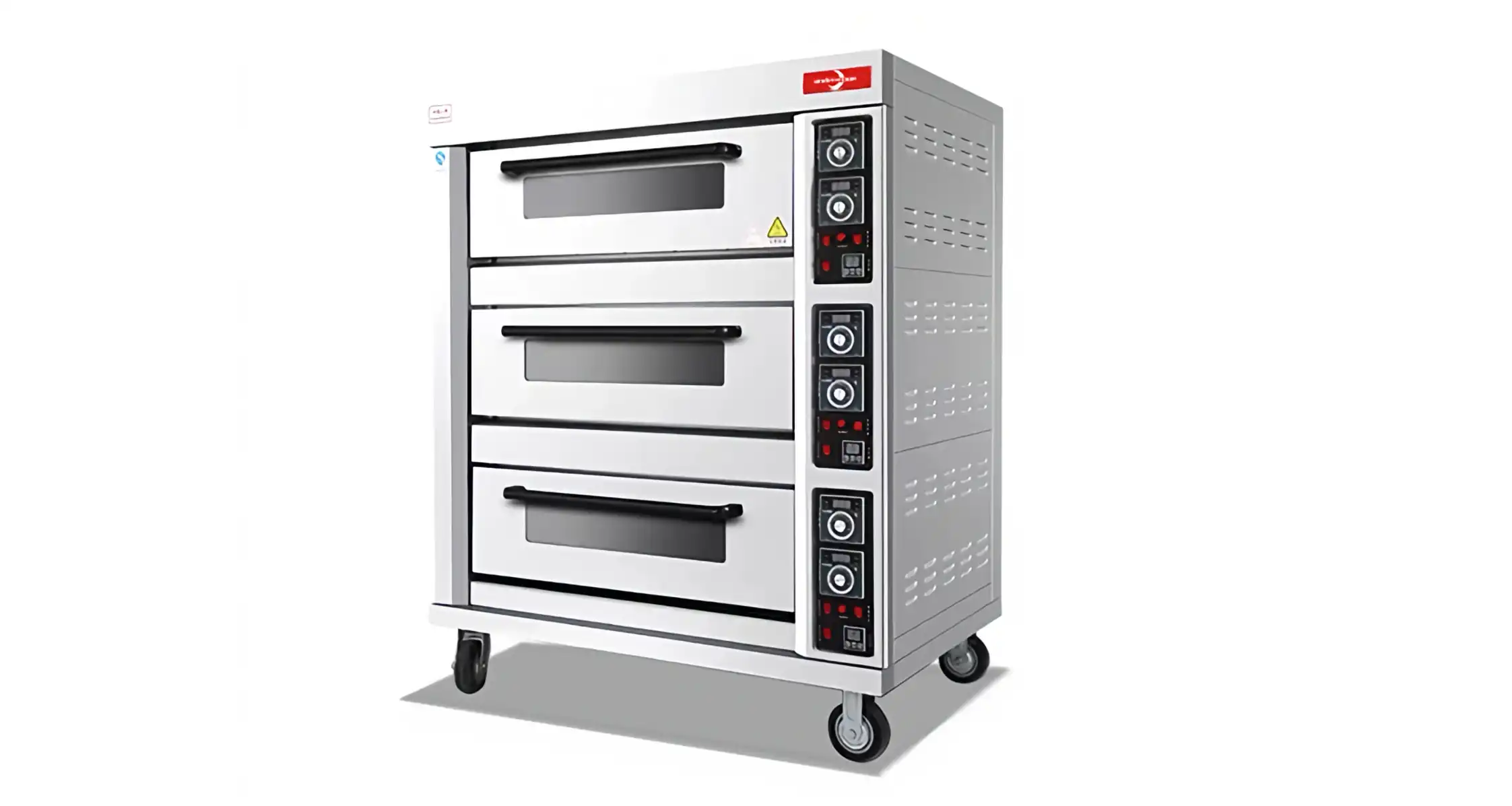
Understanding the Importance of the Three-Deck Gas Oven in Professional Bakeries
Commercial bakers are always under pressure to keep quality high while increasing production. A three-deck gas oven for professional bakeries solves these problems by combining the baking rooms vertically. This lets workers make different kinds of products at the same time without mixing the temperatures or flavors.
Why Gas-Powered Systems Dominate Commercial Baking
Gas ovens give off radiant heat that goes deeper into dough than electric ovens, giving craft cooks the intense "oven spring" they want. This temperature property is especially useful when working with doughs that need to dry quickly or that have a lot of water in them. The quick return of heat after doors are opened cuts down on production delays during back-to-back runs, keeping the process running smoothly even during busy times.
Solving Common Bakery Capacity Challenges
When output grows, traditional stoves with only one deck slow down. A three-tier arrangement takes up very little floor room (1220 x 805 mm on average), but it triples the output capacity. With this vertical design, bakers can get industrial-level output without having to pay for the space needed for multiple single-chamber units. Each deck works on its own, so croissants can be baked at 180°C, bread at 240°C, and sheet cakes at 170°C all at the same time, making the most of every minute of production time.
Addressing Thermal Consistency Issues
People who have lower-quality tools often complain about warmth that isn't even. Professional-grade gas ovens have heating parts on the top and bottom that work separately, as well as airflow patterns that are maximized. With this three-dimensional heat spread, the temperature is the same at every point of the tray, from the front to the back and from the top to the bottom. When bakery owners switch from older, less reliable models to modern, precision-engineered ones, they say they cut waste by up to 15%.
Core Technical Features to Evaluate in a Professional Three-Deck Gas Oven
When buying commercial baking tools, you have to carefully consider a lot of factors that affect both daily activities and the overall cost-effectiveness of the purchase. The following technical factors separate effective workhorses from units that don't do their job. This three-deck gas oven for professional bakery allows for efficient management of multiple product types.
Precision Temperature Control and Range
Professional models should be able to set temperatures between room temperature and 400°C, and they should stay accurate to within 5°C during the baking cycle. This range can handle everything from delicate meringues that need low heat to thick rye breads that need high heat. It's easy to use mechanical knob controls, and they work better in the humid, flour-dusted setting of industrial kitchens than sensitive touchscreens. Operators like how industrial-grade temperature controls feel and work even after thousands of change cycles because they are durable.
The microcomputer-controlled firing system makes sure that the engine heats up quickly. Within 12 minutes of starting up, the temperature usually reaches 200°C. This ability to quickly recover is useful for getting ready in the morning when several batches need to be baked one after the other. Gas-to-heat conversion that works well saves fuel and keeps the temperature inside fixed, even when techs open the doors to change the trays.
Optimal Chamber Dimensions and Capacity
Standard deck sizes can fit 400x600mm trays, which is the European standard for food service and is widely used in food service around the world. With a total capacity of six trays (two on each deck), the machine is both productive and able to handle batches of a reasonable size for quality control. Larger businesses may need special designs, which well-known makers can build to your needs.
The space between the decks in the chamber needs to be high enough to allow heat to flow properly around bigger items like panettone or crown loaves. Not enough vertical room leads to hot spots and uneven browning, which hurts the look of the product and makes customers unhappy.
Energy Efficiency and Operational Cost Management
Gas systems usually use 19.8kW when connected to 380V, which is better than electric systems of the same wattage in terms of cost-per-BTU. Double-layer insulation with high-density rock wool (at least 100 mm thick) keeps heat inside baking rooms, so energy isn't wasted and outside surfaces stay cool enough to touch safely. This kind of insulation has a 95% heat efficiency, which has a direct effect on monthly energy costs in businesses that run more than one shift.
If a bakery is in an area with high energy costs, the initial investment in gas equipment will be paid back in 18 to 24 months just by lower running costs. For centralized production centers that run nonstop, the lower cost becomes even more important.
Safety Compliance and Construction Quality
Equipment used in commercial kitchens has to meet strict safety guidelines. CE approval makes sure that the product is legal in the European market, and ISO9001 proof makes sure that the quality is managed consistently throughout the manufacturing process. Professional baking ovens have flame-out safety that cuts off the gas supply right away if the ignition fails. This keeps dangerous gases from building up. Safety cut-offs for over-temperature protect both the goods and the building.
Built from 304-grade stainless steel, which resists rust and is necessary in humid baking settings. This material can handle steady changes in temperature without bending or breaking down, so it can be used for decades without losing its strength. Rust-proof innards and exteriors make it easier to follow cleaning rules and keep the value of equipment so that it can be sold or traded in.
Usability and Maintenance Considerations for Bakery Operators
The durability of equipment rests on both how well it is designed and how well it works. During busy production times, daily usage factors have a direct effect on how well staff work and how many mistakes they make with the three-deck gas oven for professional bakeries.
User-Friendly Control Systems
The mechanical timer and temperature knobs are easy to use and don't require much training. New employees learn how to use the system in minutes, which cuts down on training time and costly mistakes caused by complicated digital interfaces. The physical controls work reliably in places where flour dust and moisture would damage electronic touchpads.
Professional cooks can follow complex production plans with the help of separate deck controls. The bottom chamber bakes bread, and the top decks can be used by pastry cooks to make puff pastry at very different temperatures and for much longer periods of time. This makes the best use of the tools and speeds up the work process during different production runs.
Maintenance Best Practices for Gas Systems
Every six months, a professional must check gas burners to clean off carbon buildup and make sure the spark probe works. This preventative maintenance lasts about 90 minutes and greatly increases the life of the burner to 8–10 years in high-intensity settings. Every day, jobs include wiping down inside surfaces with damp cloths once they're cool and making sure door seals close properly.
To make sure the same level of performance every three months, thermal mapping tests should be done to check the temperature at nine different places in each deck. Temperature differences greater than ±2°C mean that the machine needs to be calibrated or parts need to be replaced before the quality of the result is affected. Suppliers that have been around for a while offer full maintenance plans and video lessons to help in-house technical staff.
Warranty and Technical Support Value
Commercial ovens from reputable brands come with guarantees that cover both parts and work for at least one year. This coverage period gives enough time for a full evaluation to happen in real work settings. After the guarantee is over, quick technical help is still very useful. Suppliers with global support networks make sure that extra parts are available and that customers can get help with problems remotely, which cuts down on costly downtime.
Bakery owners should check with their suppliers to see if they can accommodate requests for changes after the fact. As production needs change, equipment that can be retrofitted with steam injection systems, upgraded to digital timers, or given stone deck inserts stays useful for longer. This ability to change keeps capital investments from becoming useless over time.
Comparing Three-Deck Gas Ovens with Alternative Baking Technologies
When making choices about what to buy, it helps to compare different products objectively. Depending on the operational situation and output goals, each type of system has its own benefits compared to the three-deck gas oven for professional bakeries.
Gas Versus Electric Deck Ovens
Gas models work best in places where natural gas is much cheaper than power and where gas infrastructure is already in place. Radiant heat gives handmade breads a better crust, making them taste like they were baked in a wood-fired oven, which is hard to achieve with electric heating. Gas systems work better in high-turnover environments because they heat up quickly and recover quickly after doors are opened.
Electric ovens are easier to set up in places that don't have gas service and have more accurate digital temperature controls. However, based on current energy prices in the U.S., their running costs are usually 30–40% higher than those of comparable gas units. Electric systems work best for businesses that value installation freedom over long-term cost savings.
Convection Technology Considerations
In hot air circulation stoves, baking is even because they use forced airflow instead of direct heat. This technology is great for making cookies and large sheet pans, but it can dry out delicate items too much. The steady movement of air also makes it harder to bake on paper liners and move light items that are easily moved.
Traditional deck ovens heat food more slowly and easily, so they can be used for a wider range of items. Being able to change the heat on the top and bottom separately gives you fine-tuning choices that most convection units don't have. Professional restaurants that make a wide range of goods usually choose deck designs that are flexible.
Real-World Performance Benchmarks
According to comments from the industry in 2024, chain bakeries put a high value on technology that can produce consistent results across multiple sites. When they are well taken care of, gas deck ovens produce the most consistent results. Three-deck vertical designs are good for central kitchens because they make good use of space. They report 40% more output per square foot than single-chamber designs.
Food-making plants stress having parts that are easy to find and having low failure rates. Established makers with track records spanning two decades have a higher level of dependability, with unplanned downtime averaging less than 2% per year compared to 8–12% for cheaper equipment. This reliability gap means that businesses with a lot of traffic can protect a lot of income.
Guidelines for Procuring the Right Three-Deck Gas Oven for Your Bakery
Comparing detail sheets is only one part of buying tools that works well. Strategic buying weighs up-front costs against business fit and total ownership value of a three-deck gas oven for professional bakery.
Identifying Reputable Manufacturers
Having been in the industrial baking tools business for 20 years or more is a sign of a mature manufacturer and a market that will last. This means that extra parts will be easy to find and that the company will have the information to help with troubleshooting years after the product was bought. Manufacturers who use standardized production facilities and recorded quality control systems make equipment that is more consistent than those who don't use standard procedures and don't follow them.
Ask for tours of the building or video material that shows how production works. Manufacturers who are open and honest are happy to show you how they test, source, and make their products. This level of openness shows faith in the quality standards of the products and a dedication to making customers happy.
Total Cost of Ownership Analysis
The purchase price is only 30–40% of what the tools will cost over its lifetime. Most of the costs of owning something are related to energy use, upkeep, and lost output. A cheap oven that uses 25% more gas and needs twice as many service calls ends up costing a lot more in the long run than high-end equipment that costs more at first.
Figure out the payback periods by adding up the time it takes to save money on energy, decrease waste from baking regularly, and make workers more productive. Professional-grade equipment usually pays for itself in two to three years and lasts fifteen years or more, while cheap equipment only lasts six to eight years.
Understanding the Procurement Process
Established providers help buyers from the first question they ask all the way through installation and training. For normal models, the process usually takes 4 to 6 weeks, which gives people time to choose their preferred voltage, gas type (LPG or natural gas), and look. Lead times of 8 to 12 weeks are normal for OEM clients who need private labels or custom configurations.
For international buyers, how quickly a container is loaded is important. Expert importers know how to package goods so that they can fit as many in a container as possible, which lowers the cost of moving each unit. Check a supplier's experience with exporting by getting names from wholesalers who work in similar markets.
Customization Options to Think About
Most operations can be controlled by standard mechanical controls, but digital timers with changeable presets are useful for places that do complex product cycles. The ability to add steam is useful for making European-style crunchy breads that need moisture during the first few minutes of baking. Upgrades to the stone deck make the crust better and help keep the heat in for craft uses.
Customizing the voltage and plug setup makes sure that it works with the electrical standards in your area. Matching the color of new kitchen appliances to old ones keeps the look consistent. These changes don't cost much, but they make things easier to use, which makes the investment worth it.
Conclusion
When choosing a three-deck gas oven for a professional bakery, you need to weigh the technical specs against the oven's practicalities and your long-term business goals. Some of the most important features are accurate temperature control (within ±5°C), strong construction from 304 stainless steel, and separate deck operation that lets different goods be made at the same time. Energy economy through good insulation and quick heat recovery saves profits, and full safety compliance makes sure that rules are followed.
Instead of just looking at price, procurement workers should judge manufacturers based on their proven knowledge, systematic quality control, and quick technical support. Equipment from well-known sources is more reliable, parts are easier to find, and the machines last longer. This makes up for the higher starting cost by lowering total ownership costs and increasing production downtime.
FAQ
How do three-deck gas ovens achieve even heat distribution across all chambers?
Professional models have top and bottom heaters that are separate for each deck, as well as designed airflow patterns. Far-infrared heating tubes let heat go deep into the chamber, and the improved shape gets rid of any dead spots. Double-layer insulation keeps the temperature inside stable no matter what the outside temperature is. At nine measurement places inside each deck, quality units show temperature differences of less than ±2°C.
What routine maintenance tasks preserve optimal oven functionality?
Every day, you have to wipe down cooled inner surfaces and check the stability of the door seals. Every six months, a professional checkup of the burner gets rid of carbon buildup and checks the lighting systems. Temperature precision is checked every three months with thermal mapping tests. As long as the gas pressure is checked, the fuel and air are mixed properly so that the fire can finish. If you follow the manufacturer's instructions, the burner will last an extra 8 to 10 years and will continue to use less energy throughout its life.
What energy savings can bakeries expect compared to electric alternatives?
In places where energy prices are normal in the U.S., gas systems usually have 30–40% lower running costs. The gap gets bigger in places where electricity is expensive or where getting natural gas is cheap. High-density insulation that keeps 95% of its thermal efficiency stops heat loss, and quick recovery after doors are opened cuts down on lost energy. Multi-shift companies save the most, and they usually get their gas equipment extra back within 18 to 24 months.
Partner with Undermoon for Your Commercial Baking Equipment Needs
Undermoon has been making industrial baking tools for 20 years and is trusted by chain bakeries, food preparation plants, and hospitality groups all over the world. Our three-deck gas oven for professional bakeryuse tries and true tech and features that can be changed to fit different needs. Each unit goes through strict quality checks to make sure it keeps the right temperature, meets safety standards, and lasts a long time.
We help procurement managers with all parts of the equipment lifecycle, from helping them come up with specifications and get reasonable quotes to helping with installation and providing ongoing expert support. Our manufacturing methods are ISO9001-certified, and our designs are CE-compliant. This means that you can rely on them to keep your production schedules and brand image safe. Our engineering team makes solutions that are exactly what you need, whether you need standard setups or OEM customization for private label programs.
Email our technical sales experts at undermooncn@gmail.com to talk about your bakery's product mix, capacity goals, and space limitations. We'll give you thorough suggestions, clear prices, and delivery times that work with your buying schedule. We're dedicated to your long-term success through high-quality tools and a responsive relationship as a seasoned three-deck gas oven for professional bakers.
References
1. Anderson, M. & Thompson, R. (2023). Commercial Baking Equipment: Engineering Standards and Performance Metrics. Industrial Foodservice Press.
2. Baker's Institute of Technology. (2024). Comparative Energy Analysis of Gas Versus Electric Deck Ovens in High-Volume Production. Journal of Commercial Baking Technology, 18(3), 112-128.
3. European Committee for Standardization. (2023). Safety Requirements for Commercial Gas Baking Ovens: EN 203 Compliance Guidelines. Brussels: CEN Publications.
4. Martinez, L. (2024). Total Cost of Ownership Models for Commercial Kitchen Equipment Procurement. Foodservice Equipment Reports Quarterly, 41(2), 67-83.
5. National Restaurant Association. (2023). Best Practices in Commercial Oven Maintenance and Longevity. Washington, D.C.: NRA Educational Foundation.
6. Williams, J. & Chen, K. (2024). Thermal Performance Benchmarking in Multi-Deck Commercial Ovens. International Journal of Food Equipment Engineering, 29(1), 45-61.
Online Message