Oct 27, 2026
Best Commercial Convection Oven: Buyer's Guide
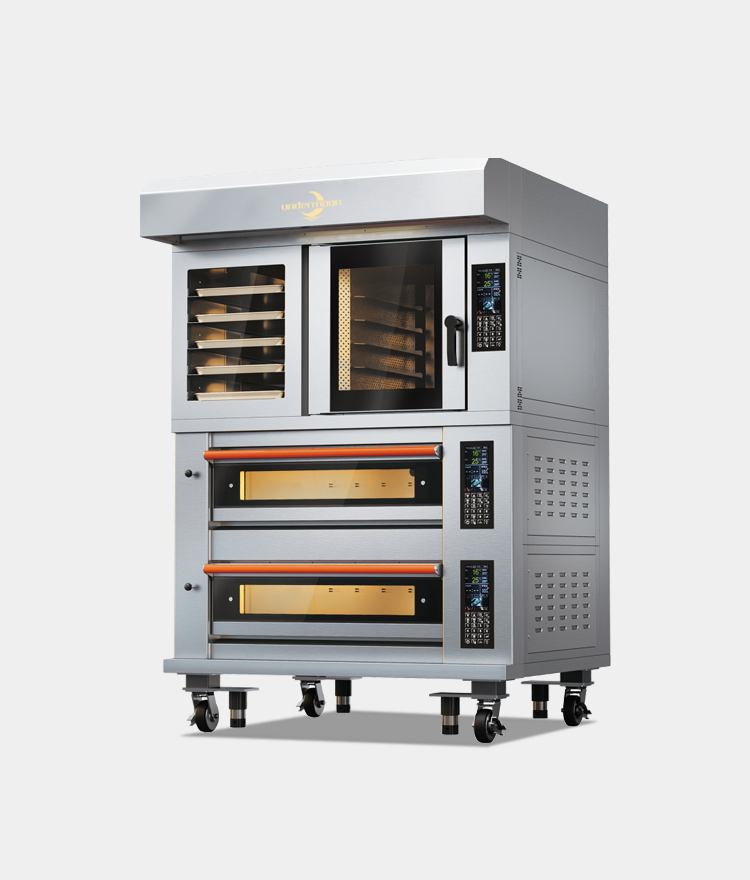
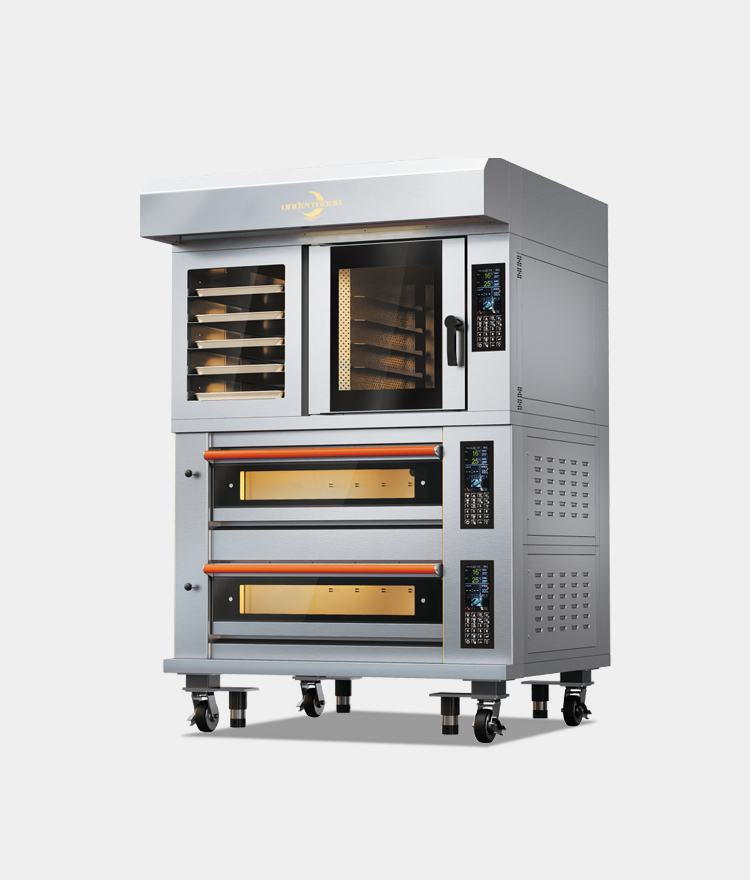
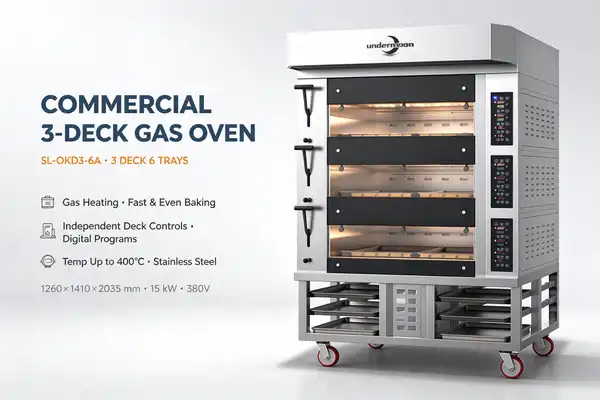
If you're sourcing a commercial convection oven for a high-volume bakery, restaurant chain, or central kitchen, this guide is written for you. Choosing the right unit goes far beyond price — it affects daily output, product consistency, energy costs, and long-term equipment reliability. After 20 years of manufacturing gas and electric baking equipment, we at undermoon have worked with procurement directors, bakery chains, and OEM clients across North America and beyond. This buyer's guide walks you through everything you need to make a confident, data-backed decision — including a close look at our flagship convection electric oven commercial model, the SL-OKD3-6A.send inquiry.
What Is a Commercial Convection Oven and How Does It Work?
The Core Principle Behind Convection Baking
An electric fan in a commercial convection oven moves hot air around the baking chamber. Moving the food around gets rid of the cool layer of air around it. This speeds up heat transfer and makes the results faster and more even. Instead of static radiant ovens, forced-air convection technology cuts cooking times by 25–30% and lets temperatures drop, which is great for kitchens that are always busy.
Gas vs. Electric: What Matters for Your Operation
There are gas lines already in most places in the U.S., so gas deck ovens can be used there because they heat up faster and cost less per BTU. When you don't have access to gas lines, it's easier to set up an electric type that lets you set the temperature. Our SL-OKD3-6A is a gas deck oven with three levels and six trays. Each level has digital settings. It has the economy of a gas unit and the digital accuracy of an electric unit.
How Independent Deck Controls Change the Game
Each deck on the SL-OKD3-6A has its own screens. One level of low heat can be used to test dough, 220°C can be used to bake sourdough, and 175°C can be used to finish a cake. Being able to work in more than one zone makes it easier to make unique breads, cakes, and other baked goods with different SKUs without having to worry about taste transfer.
Key Factors to Consider When Choosing the Best Commercial Convection Oven
Getting an industrial convection electric oven is a big deal. These are the most important things for the buying head to look at before placing an order.
- Temperature range and precision: Look for units that maintain accuracy within ±2°C. The SL-OKD3-6A operates from ambient to 400°C, covering everything from proofing to high-temperature crust coloring, with digital control eliminating manual guesswork across shifts.
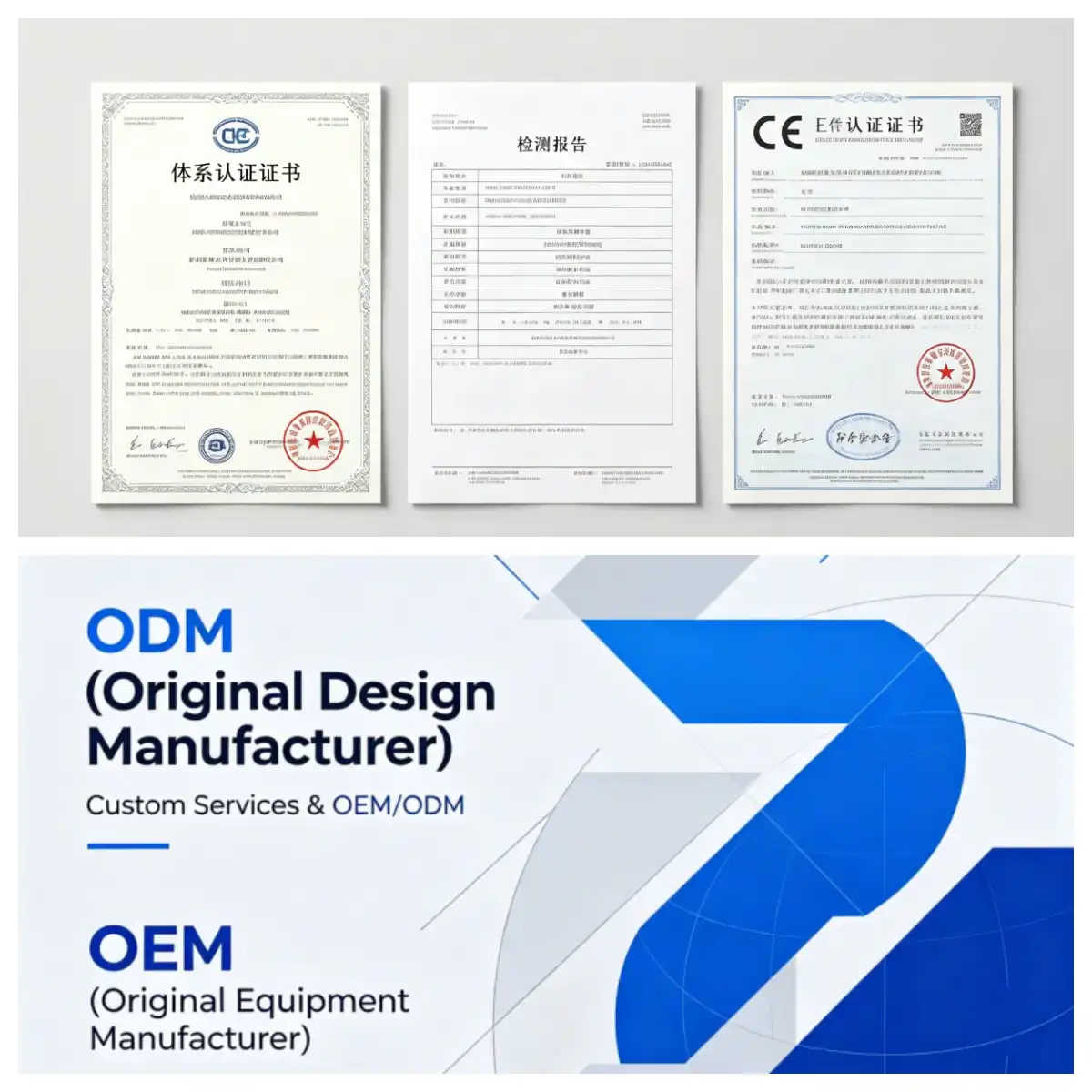
- Capacity and footprint: At 1260 × 1410 × 2035 mm, the SL-OKD3-6A convection electric oven commercial model fits a standard commercial kitchen while accommodating six full-size baking trays per cycle. Bottom casters allow repositioning without additional labor or structural modification. Certifications and compliance: For North American buyers, NSF/ANSI 4 sanitation standards and UL 197 electrical safety certification are hard requirements. The SL-OKD3-6A meets both. Buyers operating in regulated foodservice environments should verify documentation before procurement.
- Build quality and insulation: The unit's 304 stainless steel interior and exterior paired with high-density mineral wool insulation retain heat effectively, even during frequent door openings — reducing gas consumption per baking cycle.
- Customization availability: Voltage options (220V, 380V, 415V), gas type (LPG, natural gas, biogas), control panel configurations, and OEM branding are all adjustable. This matters particularly for importers and multi-region chains.
Comparing Commercial Convection Ovens: What the Market Looks Like
Established Brands and Where They Position
Food service buyers in North America trust brands like Vulcan, Garland, and Wolf a lot. This is especially true for restaurant groups and government buyers. Most of the time, their units have strong local repair networks and can get parts when they need them. Custom configurations, on the other hand, can take longer than 12 weeks to make, and a multi-deck configuration costs more than $15,000 to $25,000 before installation.
Where Manufacturer-Direct Models Fit
Manufacturer-direct providers, especially those that have been working on production for 20 years or more, offer similar technical specs at more competitive prices and give OEMs more freedom to make changes. This is shown by the SL-OKD3-6A. It's a gas oven with three levels and six trays. It has separate digital settings, is approved by both NSF and UL, and fully supports OEM and ODM. People who need a lot of work done but don't want to spend a lot of money on a brand name can use it.
Matching Oven Type to Business Model
They might pick a small convection electric oven commercial unit with one convection electric oven if they only have one spot for their fine bakery. A bakery company with more than 30 locations that sends fresh baked goods every day needs the SL-OKD3-6A because it has a build that can handle back-to-back shifts and a consistent six-tray output per cycle. Most of the time, buyers waste a lot of money by not matching the type of oven to the work that needs to be done.
Procurement Considerations: How to Buy Smart
Online Platforms vs. Direct Manufacturer Sourcing
Platforms like Alibaba RFQ allow initial comparison across suppliers, but serious B2B procurement typically moves to direct manufacturer contact for documentation review, sample units, and volume negotiation. Buyers sourcing the SL-OKD3-6A directly through undermoon gain access to factory-level pricing, compliance documentation, and customization discussion at the RFQ stage.
Lead Times and Logistics Reality
For North American buyers, a typical procurement timeline runs 12–16 weeks: 2–3 weeks for documentation and customization confirmation, 35 days for ocean freight, and 1–2 weeks for on-site installation and calibration. Planning this timeline into new store rollouts prevents the common mistake of ordering too late in a construction cycle.
After-Sales Support Expectations
North American commercial kitchens expect 48-hour response times for technical issues. Buyers should confirm parts availability, technical documentation language, and remote troubleshooting support before finalizing a supplier. Our team at undermoon provides end-to-end technical support from pre-sale spec review through post-installation follow-up.
Usage Tips and Best Practices for Commercial Deck Ovens
Calibrate Each Deck Before Your First Production Run
Digital screens are only as accurate as the point at which they were first set up. Run a calibration loop on each deck with a different probe thermometer before full output. The SL-OKD3-6A is accurate to within 2°C, but you should compare this to your specific product SKUs to avoid batch differences right from the start.
Set a Weekly Maintenance Routine
Once a week, clean the burn and the area around it. Check the door seals for heat leaks once a month. When gaskets are worn, a lot more gas is used. Because the SL-OKD3-6A is made of stainless steel, the inside is easy to clean. The legs also let you move the unit away from the wall to clean the back of it fully.
Use Program Presets for Multi-SKU Consistency
There is a digital screen on each deck that can handle weather settings with more than one stage. For the SKUs that you make the most, like French baguettes, sourdough loaves, and croissants, save profiles and give them to each deck. This makes sure that every baker on every shift gets the same result and gets rid of the need to change the temperature by hand between batches.
Conclusion
Looking for the best industrial convection electric oven commercial? Here are five things you should think about: the exact temperature, approved compliance, capacity match, build durability, and source dependability. If a baker makes a lot of goods or a buying team works in more than one place, the underworld SL-OKD3-6A checks all of these. UL and NSF have fully approved it, and it can be changed to fit North American markets. It has been made for 20 years. This is a good option for buyers who want to see how it works for themselves and not just believe a description sheet for a commercial convection electric oven.
FAQ
1. Is a gas deck oven suitable for a high-volume bakery in the U.S.?
Yes. Gas deck ovens are widely used in commercial U.S. bakeries. The SL-OKD3-6A combines gas heating with digital controls per deck, meeting NSF/ANSI 4 and UL 197 standards required for commercial foodservice operation in North America.
2. How many trays can the SL-OKD3-6A hold per cycle?
The unit holds 6 trays across 3 independent decks — 2 trays per deck. Each deck operates at a separate temperature, allowing simultaneous baking of different products without cross-contamination or flavor transfer.
3. Can the oven be customized for different gas types?
Yes. The SL-OKD3-6A supports LPG, natural gas, and biogas configurations. Voltage, control panel style, and exterior finish are also customizable. OEM/ODM branding is available for importers and regional distributors.
4. What certifications does the oven carry?
The SL-OKD3-6A meets UL 197 electrical safety standards and NSF/ANSI 4 sanitation requirements — both mandatory for commercial kitchen equipment installation across most North American jurisdictions.
5. What is the standard delivery timeline?
For North American orders, expect 12–16 weeks from confirmed order to installation: factory production, ocean freight (approximately 35 days), customs clearance, and on-site setup.
Get a Quote From undermoon — Your Commercial Convection Oven Supplier
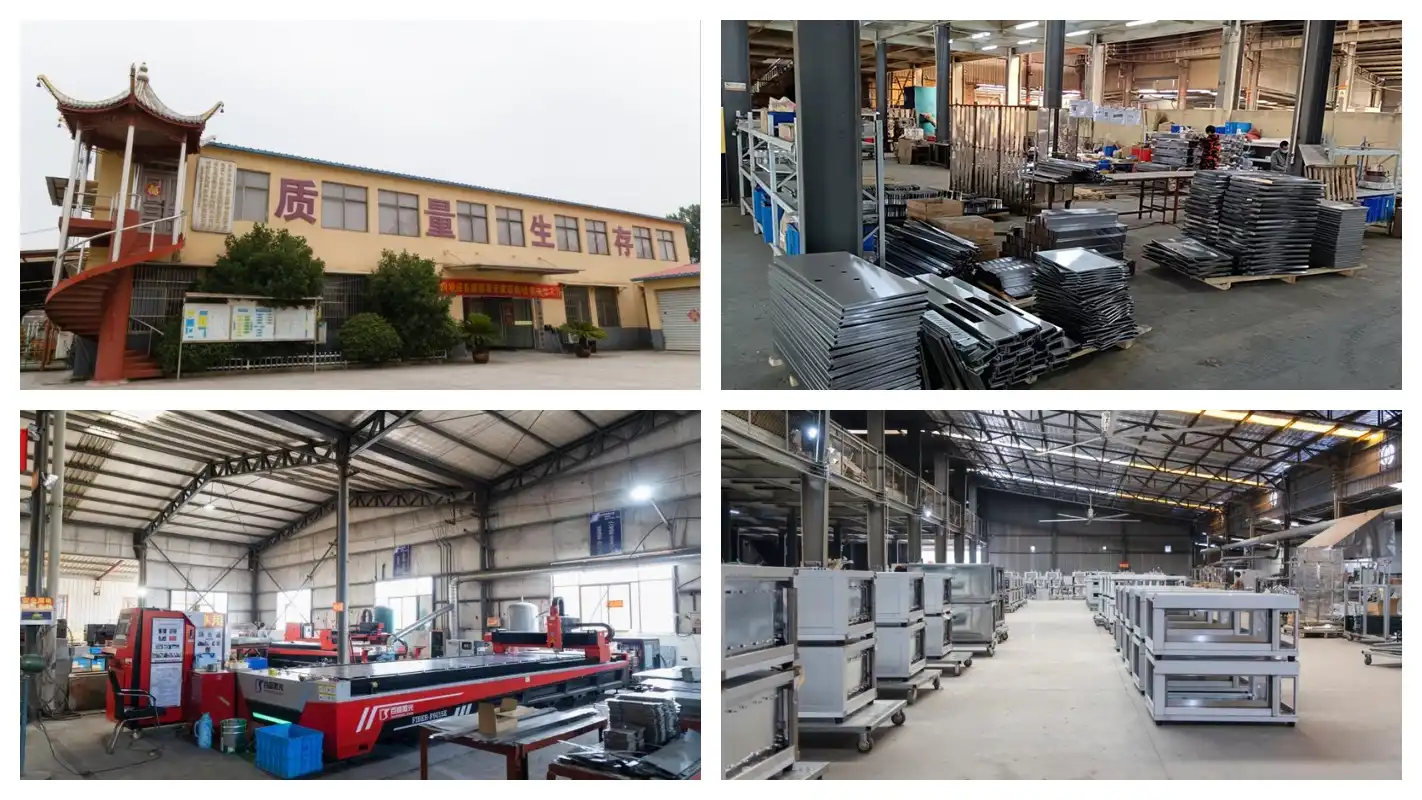
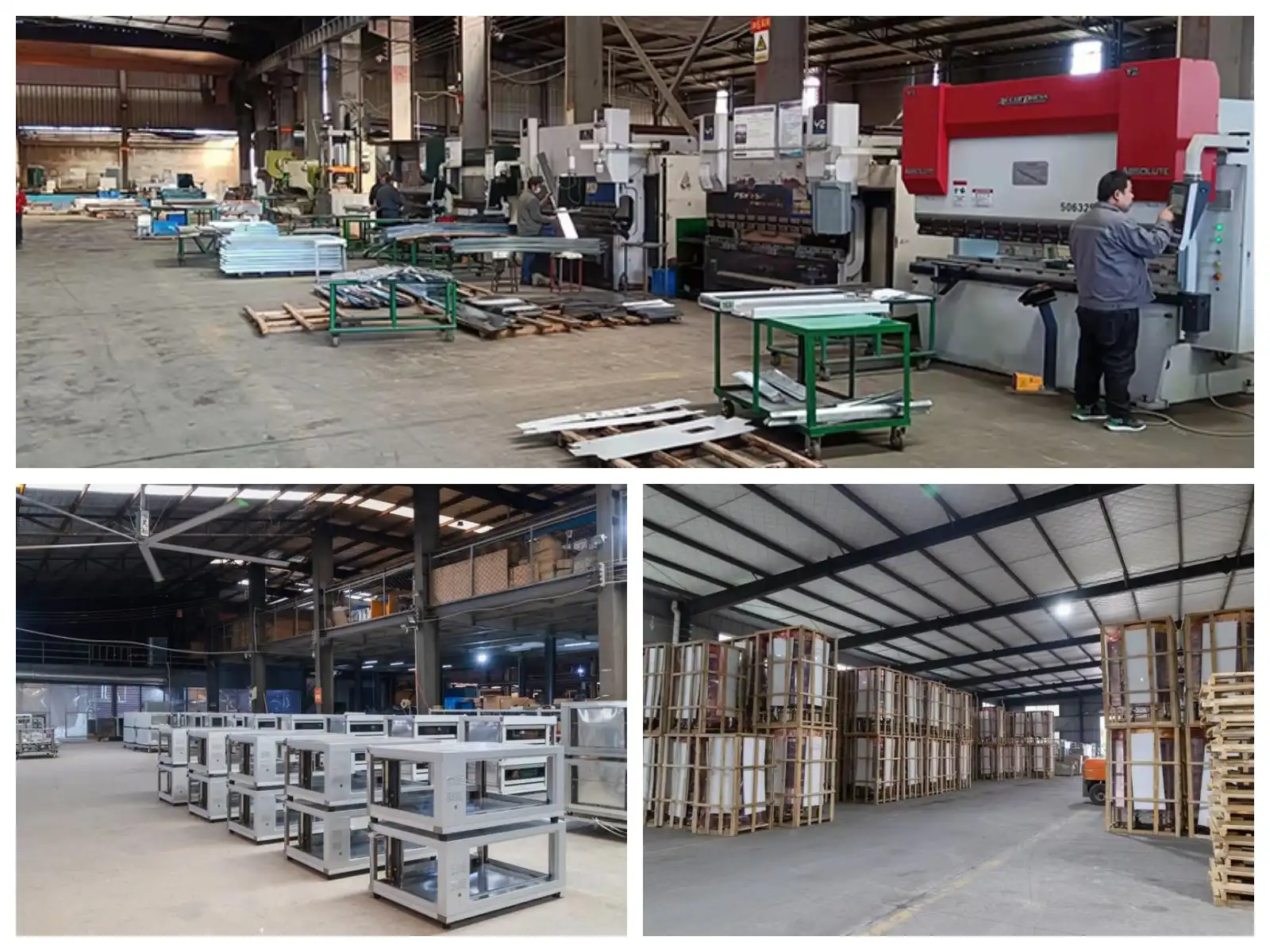
Moon has been making things for 20 years, and we use what we've learned in every unit we make. The SL-OKD3-6A is a big gas-powered convection electric oven that can be controlled digitally. It's great for chains, central kitchens, and convection electric oven commercial wholesalers who need a lot of consistency. Our team handles reviewing the specs, making sure everything is in line with the law, and making changes from a single point of contact, no matter how many places you need it rolled out to. Send us an email at undermooncn@gmail.comright away to get your quote.
References
1. Food Equipment Facts — Foodservice Equipment & Supplies Magazine, 2023
2. Commercial Kitchen Equipment Procurement Guide — National Restaurant Association, 2022
3. NSF/ANSI Standard 4: Commercial Cooking,Re-thermalizationn, and Powered Hot Food Holding and Transport Equipment — NSF International, 2021
4. UL 197: Standard for Commercial Electric Cooking Appliances — Underwriters Laboratories, 2020
5. Energy Efficiency in Commercial Foodservice Equipment — U.S. Department of Energy, 2022
6. IBIE Baking Industry Trends Report — Baking Industry Shows, 2023
Online Message
YOU MAY LIKE
High quality furniture manufacturer