Sep 1, 2026
Why Energy-Efficient Ovens Are Essential in Modern Bakeries
Energy-efficient ovens have become non-negotiable investments for commercial bakeries facing rising utility costs and tightening profit margins. Multi-deck configurations like the 3 deck energy efficient oven address critical operational challenges by reducing energy consumption by 30-40% compared to traditional models while maintaining high production throughput. These ovens utilize advanced insulation materials and independent temperature controls to minimize heat loss, ensuring consistent baking results across simultaneous batches. For bakeries producing thousands of loaves daily, the combination of lower gas costs, precise digital controls, and enhanced thermal retention translates directly into sustainable profitability and competitive advantage in demanding markets.
Understanding 3 Deck Energy-Efficient Ovens
What Makes These Ovens Different?
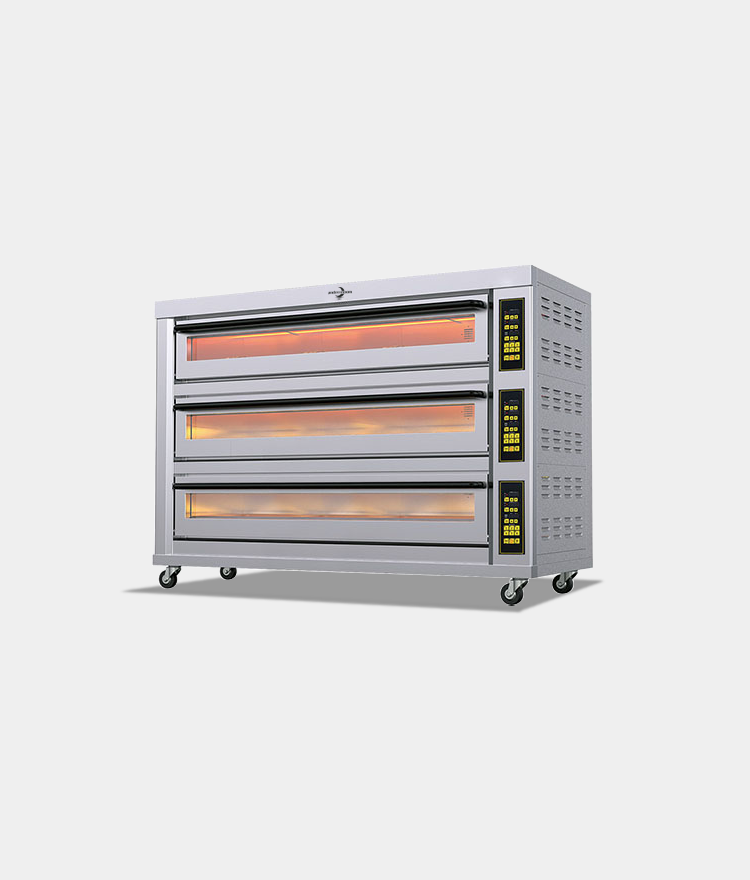
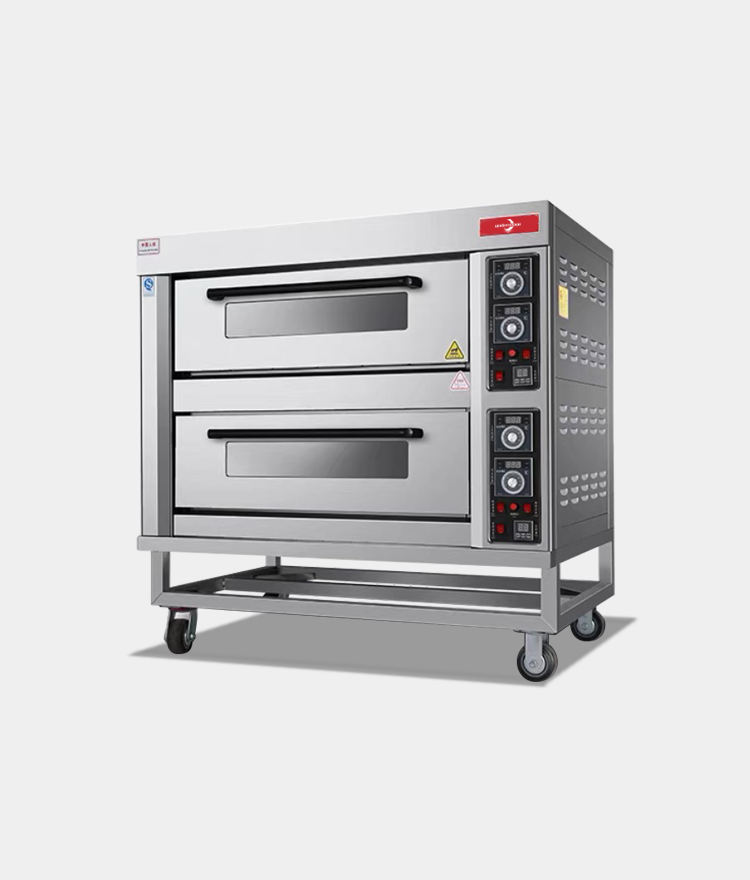
Commercial 3-deck energy-efficient ovens with three separate baking rooms are a big step forward in engineering compared to ovens with only one chamber. Bakers can make handmade breads at 220°C on one level and finish delicate cakes at 180°C on another. This is possible because each deck has its own temperature zone. The main innovation is high-density mineral wool insulation, which has a thermal conductivity rating of less than 0.04 W/mK and is usually thicker than 100 mm. Compared to traditional models, this construction cuts radiant heat loss by about 40%. This means that operational costs stay stable even during long production runs.
Gas-powered models quickly recover heat, which is very important when loading multiple batches at peak times. Digital control panels with PID temperature regulation keep the temperature accurate to within ±1°C, so you don't have to guess like you do with traditional clocks. This capability is demonstrated by our 6‑tray gas 3‑deck energy‑efficient oven, which is made of SUS304 stainless steel and has computerized controls that can handle temperatures from room temperature to 400°C.
Key Components and Technology
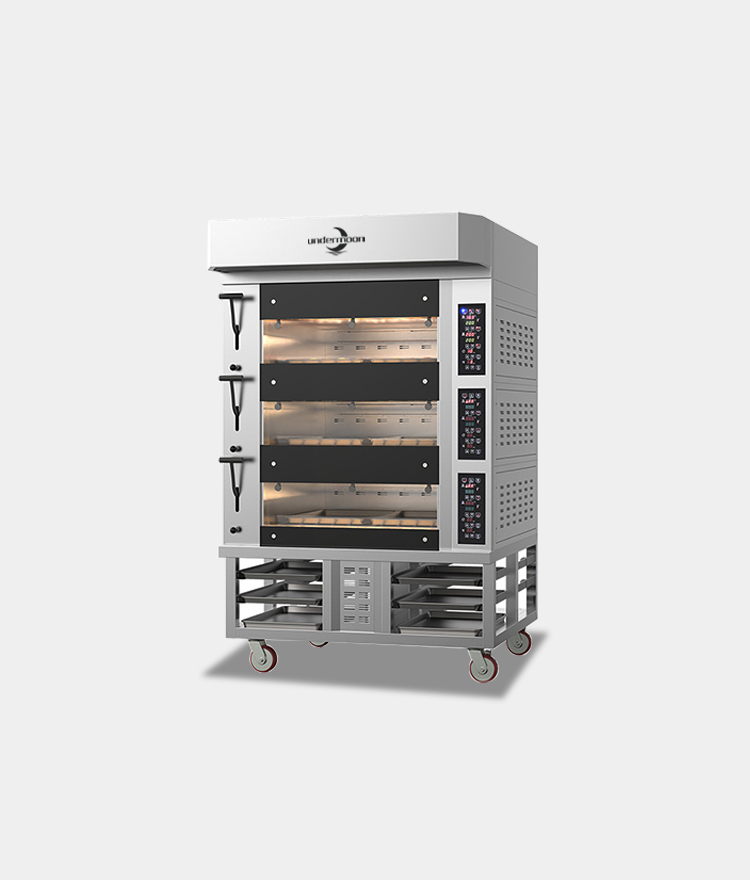
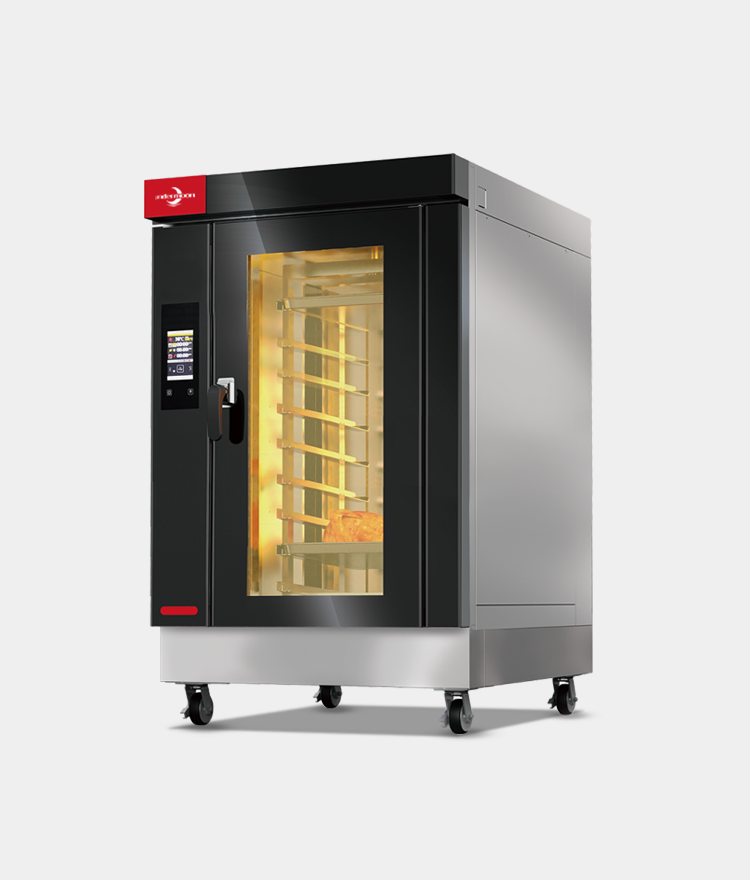
Modern 3-deck energy-efficient ovens that use less energy have a number of different methods that work together. The heating system has far-infrared elements or gas burners that are placed so that the heat is spread evenly across the baking area. Triple-glazed viewing windows with low-emissivity coatings let you keep an eye on things without letting heat escape. Independent deck controls allow for what the business world calls "batch flexibility"—running different products at the same time without changing the temperature or flavor.
In everyday life, the insulating layer saves money without being noticed. At first, things that can be seen, like digital panels, get people's attention. But what really matters is the thermal barrier that's hidden. Good makers use ceramic fiber or mineral wool that can withstand constant exposure to 1200°C. This makes sure that the structure stays strong even after years of going thru different temperatures. Professional-grade equipment is different from consumer-level appliances that have been modified for business use by paying close attention to the parts that are hidden.

Benefits of Using 3-Deck Energy-Efficient Ovens in Modern Bakeries
Dramatic Reduction in Operating Costs
In most places, gas heating is much cheaper than electric heating, especially for businesses that use a lot of gas. If a bakery that makes 1,000 loaves a day switches from electric to gas models, it can save between $800 and $1,500 a month. When you do the math, you can see that gas gives you about 3.5 times more heat energy per dollar spent than power does in many places with 3 deck energy efficient oven equipment. The payback period for equipment usually lasts between 14 and 22 months when combined with better insulation that keeps 40% more heat in.
Besides the type of fuel, the three-deck layout makes the best use of floor room. Instead of putting in three separate ovens, each of which would lose heat and take up space, a single vertical unit can do the same job. This small design lowers the amount of heat that hits kitchen cooling systems from the outside, which also saves money on air conditioning costs in the summer.
Enhanced Production Capacity and Consistency
Multi-deck baking at the same time changes how output schedules are made. With six trays spread out over three decks, 18 normal bread pans can be used at the same time. It gives production managers more freedom to vary loading times so that there are no breaks in production. The independent deck operation is especially useful for bakeries that sell a variety of goods and meet the needs of a wide range of customers throughout the day.
Accurate temperature has a direct effect on product uniformity, which is a very important factor for a brand's image. Digital controls get rid of the ±15°C difference that was common in older mechanical systems. When the temperature stays within a 2°C range, bakers can be sure that every batch will have the same top development, crumb structure, and rise pattern. This regularity cuts down on waste from goods that are too baked or not developed enough, which protects both material costs and customer happiness.
Here are additional advantages that matter in daily operations:
- Rapid heat recovery: gas burners get back to baking temperature in 90 seconds after loading, while electric models take 4 to 6 minutes. This speed keeps the production going even when it's busy, so workers don't have to extend baking times.
- Safety features: Modern gas systems have safety features like automatic ignition, flame failure protection, and protocols for finding leaks that meet international safety standards. Gas equipment that is well taken care of has the same level of risk as electric equipment that is installed according to the manufacturer's instructions.
- Simplified maintenance: stainless steel interiors don't rust and are easier to clean. Parts that can be taken off make routine inspections possible without special tools, which cuts down on downtime and the cost of maintenance labor.
These combined benefits take care of the main worries that plant owners and production managers have when they think about buying new equipment. The investment keeps profit margins safe and helps meet production goals that can grow with the business.
Choosing the Right 3 Deck Energy Efficient Oven for Your Bakery
Critical Evaluation Criteria
Instead of making hasty decisions based on price, choosing commercial baking tools takes a methodical approach. Certifications for energy efficiency give you objective standards, but the standards vary from market to market. Look for manufacturer specs that list the real amount of energy used during each baking session, not just the highest possible values. Ask for performance data that shows how long it takes to heat up, how fast it recovers, and how much power it uses in standby mode under real-world conditions.
Capacity alignment checks to see if the equipment really meets the needs of output. For bakers that make 800 to 1,500 units a day, a 6-tray 3 deck energy efficient oven system works best. For smaller businesses, a 4-tray setup may be more cost-effective. Too big of equipment loses energy heating up rooms that aren't being used, and too small of units force inefficient batch splitting that takes more time and costs more in utilities.
Gas compatibility should be carefully checked during the buying process. For natural gas and LPG, the burners and pressure regulators need to be set up differently. Because of this, our customization services make gas systems work with the infrastructure in each area, so you can do business in places with centralized natural gas networks or places that need propane tanks. It's also important that the model is easy to install. Ours only needs standard 220V power for the controls and a gas connection, so you don't have to pay for expensive electrical upgrades.
Comparing Manufacturers and Support Services
Established manufacturers have twenty years of experience making things, while newcomers to the market only have ten. Jiangsu Qianside International Trade Co., Ltd. only sells industrial deck ovens, convection systems, and pizza ovens. We don't try to be experts in a lot of different types of products that aren't connected. This skill makes sure that our engineering team knows how high-frequency industrial baking affects heat flow and structure stresses.
Choosing the right parts is the first step in quality assurance. Premium SUS304 stainless steel doesn't get damaged by steam or the acidic leftovers of dough fermentation, which break down cheaper materials in 3 to 5 years. Before units leave our production facilities, they are inspected in a multi-stage process that checks the gas connections for leaks and makes sure the temperatures are correct. People who buy things get things that are made to last 10 years or more, not disposable items that need to be replaced every few seasons.
Support after the sale is what turns an investment in tools into an asset or a burden. Parts and labor should be covered by warranties for reasonable amounts of time, and response times should be made clear. We offer expert documentation in a number of languages and keep in touch with service networks in the most important areas. For businesses that lose thousands of dollars every hour because of downtime, this support system is worth more than the price of the tools.
Optimizing Energy Efficiency in 3-Deck Ovens: Best Practices
Temperature Management Strategies
Precision control technology is only useful if operators know how to use it in the best way. It's important to spend energy on preheating, but too much warm-up loses fuel. From a cold start, our digital systems reach baking temperature in 18 to 22 minutes. This means that operators can time activation with production schedules instead of running ovens when they're not being used.
Strategic temperature zoning makes the independent deck edge work better. Lower decks should be used for things like crusty breads that need more heat at the bottom, and upper decks should be used for things like pastries with egg wash finishes that need more heat at the top. This vertical heat stratification—hotter at the bottom and not as hot at the top—works with natural circulation patterns instead of against them.
Don't open doors too many times, because that lets hot air out and forces healing processes to happen. Plan filling orders that group things that bake at about the same time so that there aren't too many breaks in the middle of the cycle. If you need to check on the progress of a product, use the viewing window instead of opening the door. These small changes to how things are done add up to real monthly saves.
Maintenance Protocols That Preserve Efficiency
When maintenance stops, thermal efficiency goes down quietly. When grease and carbon build up on heating elements, they act like insulators, making systems work harder to reach their goal temperatures. Plan to clean the inside once a week with the right non-abrasive cleaners that will protect stainless steel surfaces. As part of a monthly deep cleaning, the burner should be checked for damage, and any waste that is blocking gas flow should be removed.
Door seals need to be checked often because small holes let heat escape all the time. Thermal cycling can break down seals, letting enough hot air through to raise energy use by 8–12% without changing how well they work. If you see tension set or obvious cracks in the gaskets, you should replace them before the efficiency losses get worse.
Verification of the calibration makes sure that the temperature stays within the acceptable range in 3 deck energy efficient oven equipment. Sensor shift is found every year with approved external thermometers before it affects the quality of the product. Our digital systems save calibration data, which lets our technical staff keep an eye on performance trends and plan changes ahead of time instead of having to fix problems when they happen.
Procurement Guidance for Commercial 3 Deck Energy Efficient Ovens
Sourcing from Reliable Suppliers
It's important to do more than just compare prices when buying equipment because it's a big investment of money. Established makers with verifiable production sites offer options for relief and stability that are missing from units that were put together by a broker and don't have a clear origin. We use standard production bases with quality control systems that watch every step of the assembly process, from making sure the raw materials are correct to checking the end function.
Buyers won't find out about capacity limits after installation if specs are clear. Request thorough technical drawings that show the real sizes of the inside of the cabinet, not just the sizes of the outside. Check the reported energy usage numbers against the testing guidelines. Some manufacturers give best-case scenarios instead of long-term running costs. The specifications we put out there are based on real-world performance data gathered from a variety of installation settings.
Customization takes into account the fact that standard equipment doesn't always work perfectly in every operational situation. Different areas have different voltage needs, different types of gas, and different production processes have different needs. With our OEM and ODM services, we can change core technology platforms to fit your needs without having to pay more for fully unique engineering. This adaptability is especially helpful for owners with multiple locations who want to standardize tools across locations with different infrastructure.
Understanding Total Cost of Ownership
The purchase price is only the first cost in an ongoing cycle of ownership that lasts more than one year. Think about how much the installation will cost, including any changes that need to be made to the gas lines or the wiring. The money spent on training makes sure that operators understand digital controls and safety rules, so they don't have to make costly mistakes while learning.
Maintenance agreements help you plan your budget for regular service and make sure that only qualified technicians do repairs. When production dates are approaching, having access to parts is important. Suppliers with a large inventory and fast shipping choices reduce the risk of downtime. Our service network keeps important extra parts in regional distribution centers so that we can respond quickly when something goes wrong.
When making predictions about how much energy something will use, it's best to be conservative and use real planned working hours. At average commercial gas rates, a unit that runs for six hours a day and uses 19.8 KW costs about $230 to $280 a month. Over the course of five years, these continued costs are much higher than the purchase price. This is why efficiency scores are the most important part of total cost analysis.
Conclusion
3 deck energy efficient ovens used to be extras, but now they're a must-have for bakers that want to compete in markets where prices are important. The cost-effectiveness of gas heating, advanced insulation technology, and accurate digital controls all work together to make operational costs and product consistency better in a way that can be measured. Multi-deck configurations increase production capacity in limited floor space, and separate temperature zones allow for a wide range of products. For plant owners who make hundreds or thousands of units every day, choosing the right tools has a direct effect on their ability to make money and stay competitive. The original investment in tested technology from well-known companies pays off in lower energy costs, less downtime, and reliable performance over years of tough service.
FAQ
How much energy can a 3-deck energy-efficient oven actually save compared to older models?
Modern multi-deck ovens with better insulation use 30 to 45 percent less energy than older models that don't have thermal barriers. Natural gas or LPG costs much less per thermal unit than electricity in most markets, so gas models save even more money. Depending on local energy rates and production output, a bakery that is open 300 days a year can save between $3,000 and $6,000.
What maintenance does a gas deck oven require to maintain efficiency?
Cleaning the inside once a week stops buildup that slows down heat transfer. A monthly check of the burner makes sure that the gas flow is correct and that the burning process works well. Every year, the temperature is checked to make sure it stays within the acceptable range. Every three months, the seals around doors should be checked because even small leaks waste a lot of energy. Following these rules will keep the equipment working well for as long as it is used.
Are gas ovens as safe as electric models for commercial bakery environments?
International safety standards are met by modern gas baking systems that have automatic ignition, flame failure cutoffs, and leak detection. When fitted according to the manufacturer's instructions and with enough air flow, gas equipment has about the same level of risk as electric equipment. Our units go through a lot of tests to make sure they don't leak and will last for a long time in commercial settings.
Partner with Undermoon for Your Baking Equipment Needs
By upgrading to more advanced multi-deck gas ovens, your bakery will be set up for long-term growth and operational excellence. Undermoon specializes in industrial baking solutions that are backed by 20 years of manufacturing experience and a track record of success in a wide range of production settings. Our 3-deck energy-efficient oven systems deliver the capacity and consistency needed for high-volume operations by combining cost-effective gas heating with precise digital controls. We are an experienced 3-deck energy-efficient oven supplier, and we offer full customization services that include meeting voltage needs, making sure gas types work with the oven, and integrating the production process. Get in touch with our team at undermooncn@gmail.com to talk about custom solutions that fit your budget and operational needs. You can look at full specs and learn why top bakeries trust our tools for their production lines at jslg888.aixdb.cn.
References
1. Bakery Production and Marketing (2022). "Energy Efficiency Standards in Commercial Baking Equipment: A Comparative Analysis." Industrial Baking Technology Journal, Volume 18, Issue 3, pp. 45-62.
2. Chen, M. and Rodriguez, A. (2021). "Thermal Performance Optimization in Multi-Deck Commercial Ovens." Food Processing Engineering Quarterly, Volume 29, Issue 2, pp. 112-128.
3. International Bakery Equipment Manufacturers Association (2023). "Guidelines for Energy-Efficient Baking Systems in High-Volume Production Facilities." Technical Standards Publication Series, Document IBEMA-2023-07.
4. Thompson, R. (2022). "Cost-Benefit Analysis of Gas versus Electric Heating Systems in Commercial Bakeries." Journal of Food Service Technology, Volume 14, Issue 4, pp. 201-219.
5. World Baking Institute (2021). "Best Practices for Thermal Management in Multi-Chamber Deck Ovens." Professional Baker's Technical Reference Manual, Third Edition, Chapter 8.
6. Zhang, L., Kumar, S., and Martinez, J. (2023). "Insulation Materials and Energy Conservation in Commercial Baking Applications." Materials Science in Food Production, Volume 7, Issue 1, pp. 78-95.
Online Message
YOU MAY LIKE
High quality furniture manufacturer