Sep 22, 2026
Can You Use a 220V Multifunctional Oven on 110V?
Using a multifunctional oven 220v on a 110V power supply is not recommended and poses significant operational risks. These commercial ovens are engineered to operate at 220V-240V to deliver the power density required for precise temperature control and rapid heating cycles. When connected to 110V, the appliance receives only half the intended voltage, resulting in severely reduced heating capacity, extended baking times, and potential internal component damage. The heating elements will struggle to reach target temperatures, compromising product consistency and throughput. Beyond performance issues, electrical safety becomes a critical concern as circuits may overheat attempting to compensate for voltage deficits, creating fire hazards and invalidating manufacturer warranties.send inquiry.


Understanding the Electrical Requirements of a 220V Multifunctional Oven
Electrical systems in commercial baking tools are very different from those in home items. When procurement workers know about these standards, they can make smart choices that protect their investments and keep operations running.
Why Voltage Matters for Commercial Ovens?
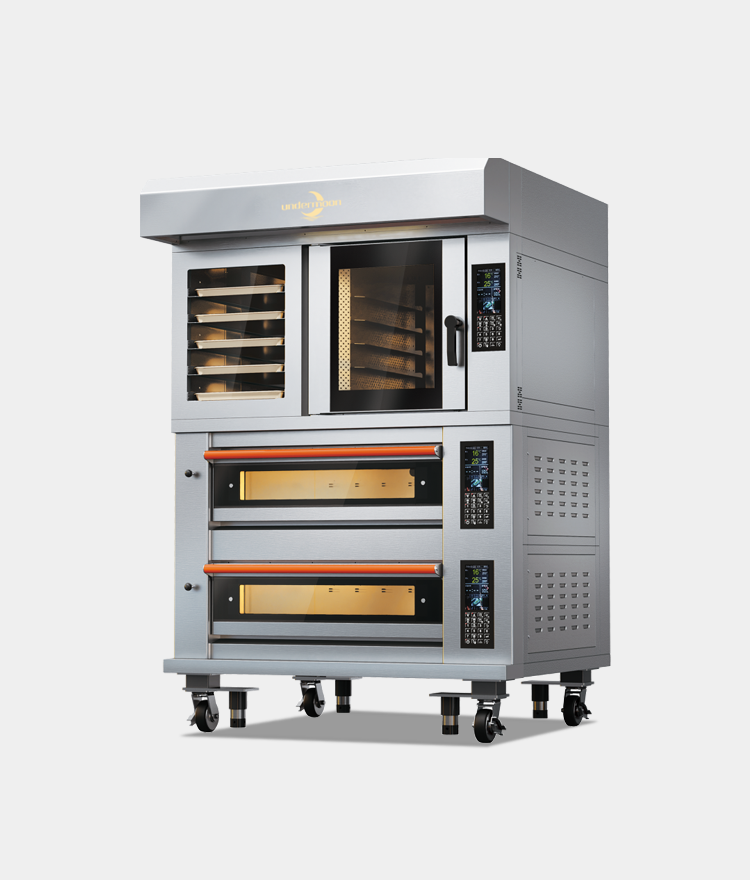
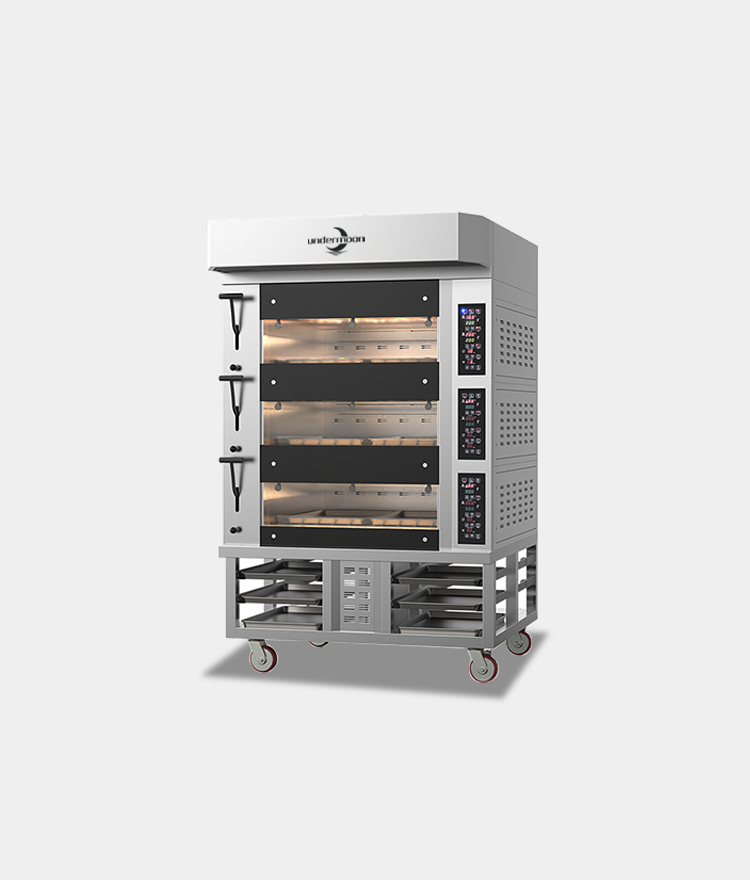
How much power your oven can send to the heating elements is directly related to the voltage. Commercial ovens that are designed to work with 220V usually use between 15 and 30 kilowatts of power. This lets them heat up quickly and keep the temperature stable during multiple baking cycles. Our 29.7KW 3-deck commercial oven is a good example of this power need. The high-wattage design of the unit lets it keep all three sections at the same temperature, from room temperature to 400℃, even when doors are opened to load or unload trays.
The electrical design has special parts that are set up to work with 220V. Digital control panels use precision thermocouples to keep an eye on the temperature and change the power delivery in real time to keep the set temperature profile. When the energy drops to 110V, these control systems cannot do what they are supposed to do. The heating elements do not get enough current, which makes the digital controller keep seeing temperature drops that it cannot fix.
Core Components and Their Voltage Dependencies
The heating elements are the parts that are most affected by electricity. High-quality resistance heating elements are used in commercial ovens to reach certain power outputs at rated voltage. Due to the exponential link between voltage and power in resistive loads, these elements only produce about 25% of the heat they are supposed to at 110V.
Sensors that measure temperature and control boards also need a steady voltage input. Microprocessors are used in modern digital control systems. These processors need steady power to get accurate readings and make changes quickly. Sensor drift can happen when the voltage changes or stays low for a long time. This can lead to wrong temperature readings and unpredictable baking results.
Risks of Operating 220V Equipment on 110V Supply
Using tools that do not have the right voltage causes multiple failure modes. The immediate effect is a huge drop in the oven's heating power, which often means it cannot reach even moderate baking temperatures. This drop in performance is too bad for central kitchens that serve multiple sites, because it causes production delays that spread through the whole distribution network.
When the power is low, electrical parts are stressed in ways that are not normal. In order to protect their circuitry, control boards can go into error states or shutdown modes. Heating parts that are turned on and off over and over again while trying to hit the right temperature wear out faster. Long-term current draw at high temperatures can speed up the breakdown of insulation materials around wires. These conditions void manufacturer warranties and put facility managers at risk of being sued.
Standards for safety certification assume that multifunctional oven 220v equipment works within certain voltage ranges. If a device deviates from its stated voltage, it no longer meets the safety testing standards. This could mean that it breaks local electrical codes and insurance rules.
Comparing 220V vs 110V Multifunctional Ovens: What B2B Buyers Need to Know?
Choosing the right voltage has a big effect on how well equipment works, how much it costs to install, and how efficiently it runs. Commercial buyers need to compare these factors to their production needs and facility infrastructure.
Power Delivery and Heating Performance
Power gearbox is the biggest difference. A 220V circuit produces the same power with half the current of a 110V circuit. This reduces wiring resistive losses and boosts power. On 110V systems, 25–30 kilowatt ovens cannot be utilised because the circuit breakers cannot manage the current.
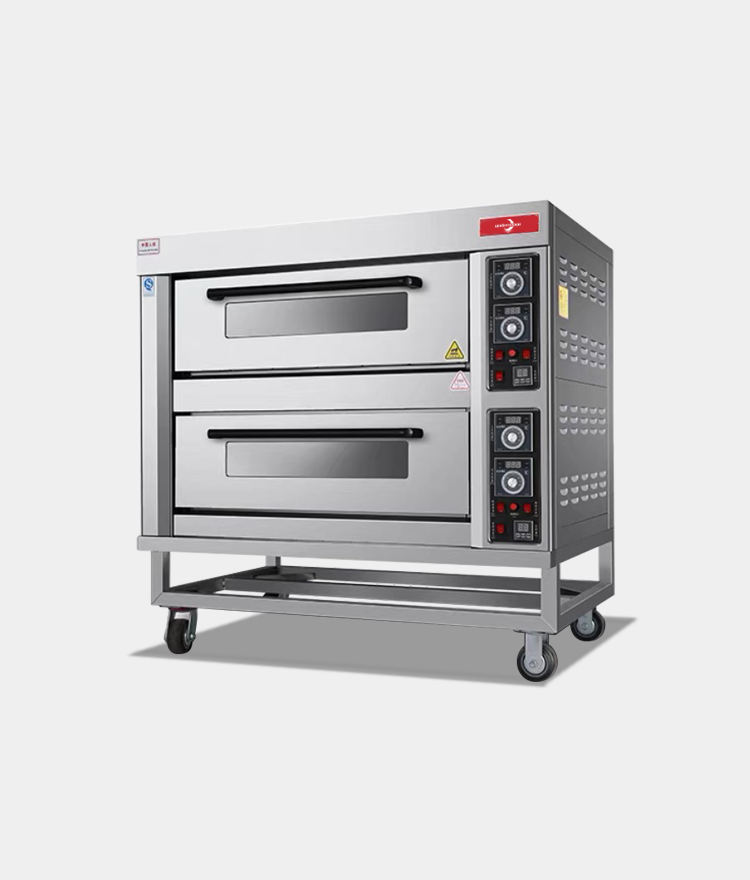
We demonstrate this with our commercial 3-deck oven. With a power output of 29.7KW at 380V (which may be changed to 220V), the machine immediately returns to normal temperature after the door is opened and evenly heats nine trays. At 110V, this performance would require too-large conductors and circuit protectors.
Temperature stability is another key distinction. Systems with higher voltage respond faster to control inputs, tightening temperature bands during busy baking. This level of accuracy is needed when central kitchen operations require all batches of food going to different stores to be the same.
Installation Infrastructure and Compatibility
Before buying new equipment, facilities must assess their electrical infrastructure. Many industrial restaurants in Asia, Europe, and elsewhere employ 220V–240V three-phase power systems. Most North American structures use 120/240V split-phase. In commercial installations for heavy equipment, 208V or 240V three-phase service is common.
Each voltage level has different location. A 110V oven of the same dimensions would require twice as broad electrical wires as a 220V oven, increasing material and labour expenses. Circuit breaker panels must handle increased amperage rates, which may need infrastructure upgrades that cost more than the equipment.
More than the oven's size matters when planning space. Higher-current 110V systems heat electrical distribution parts, thus panels and junction boxes need greater space. Due to space constraints, kitchen design are harder, especially when adding on to an existing kitchen.
Safety Standards and Compliance Considerations
Electrical safety laws vary, but they all require equipment to operate within its limits. Commercial ovens approved for 220V undergo voltage-specific tests. Ground fault protection, insulation integrity, and electromagnetic compatibility are tested.
These licenses prohibit using equipment not rated for that power. Inspection officials can ticket locations for disobeying rules, and insurance companies might deny claims for improperly utilised equipment. Electrically compliant equipment is being checked more closely in food safety assessments since thermal handling issues might cause contamination.
We meticulously test each oven according to IEC 60335 requirements throughout production. This ensures each oven fulfils international safety standards. We verify your local electrical code compliance for facility inspections and permit applications. Only equipment with particular power levels is approved.
Adapting or Choosing the Right Oven: Practical Solutions for B2B Procurement
When voltage needs do not match up with available building power, procurement managers have to make decisions. There are different approaches, and each has its own pros and cons.
The Transformer Option: Capabilities and Constraints
Step-up transformers can convert 110V to 220V, allowing voltage-incompatible equipment to work. Industrial-grade transformers can be used continually in businesses, but they require consideration.
The transformer's capacity must be 125–150% larger than the oven's power needs for safety. A 30KW oven requires a transformer of at least 40KVA, which increases the equipment's cost and the oven's. These transformers generate heat, requiring particular ventilation and increasing building cooling loads. Buyers are typically shocked by how massive 40KVA transformers are—they need floor space and support.
Transformation losses reduce system performance and increase operating costs. Good multifunctional oven 220v transformers are 92–95% efficient, meaning 5–8% of the electricity they receive is squandered as heat. Years of use add up to huge energy expenses from these losses. Transformers need regular inspections, cooling system maintenance, and replacement, which increases costs.
Transformers add another point of failure, which is very critical. All sites down the chain lose food when central kitchen equipment breaks. Adding transformer failure modes increases risk. When service technicians must determine if the problem is with the oven, transformer, or connection, response times increase.
Procuring Voltage-Matched Equipment: The Optimal Approach
By choosing ovens that are designed to work with the voltage available at the facility, adaptation problems can be avoided, and performance and reliability can be improved. When equipment is designed from the start to work with a certain power, it works at its best and still has all of its safety standards.
As a standard part of our manufacturing services, we can change the voltage. During production, the same industrial oven with three levels can be set up to work with 220V, 240V, or 380V three-phase electricity. This customization goes beyond just switching out parts; the heating elements, control systems, and safety interlocks are all set up to work best at the given voltage.
This method offers more benefits for procurement. The warranty still covers everything, with no exceptions for power issues. Service networks can fix the equipment by following standard steps and getting new parts. The documentation that comes with the unit matches how it is actually set up, which makes maintenance and inspection easier.
Working with Experienced Manufacturers
Buying from companies that have a lot of experience making business tools makes sure that buyers get the right advice throughout the whole process. After 20 years of focusing on industrial baking equipment, we know that to do a good job installing something, you need to know more than just the equipment's specs.
During the planning part, we work with procurement teams to figure out how much electricity the building can handle, how much production is needed, and what kinds of products should be used. This consultation finds out about possible infrastructure problems before a purchase is made, so there are not any expensive surprises during installation. When needed, we work with the facility's electricians to make sure the connection goes smoothly.
You can change the control tools, the layout of the chambers, and even the sizes of the machines themselves if you need to get creative with limited room. This flexibility is especially helpful for large bakery chains that operate in many markets, as it lets us meet uniform performance standards while also changing voltage and legal compliance to meet local needs.
Energy Efficiency and Operational Costs of 220V Multifunctional Ovens
Energy use has a direct effect on how profitable a business is, especially in places that make a lot of things and run their equipment nonstop. Figuring out how people use things helps you figure out how much they cost and find ways to make things better.
Power Consumption Patterns in Commercial Operations
Commercial deck oven energy use varies throughout operation. Heating elements work at full capacity to elevate the chamber temperature from room temperature to the specified level during preheating. This consumes the greatest electricity. This is the greatest demand state for our 3-deck unit at 29.7KW. Because control systems cycle elements to maintain setpoints, tanks require less electricity once they reach the proper temperature.
Power consumption is low during active baking, with occasional surges. Opening doors to load items releases thermal energy, which resets heating elements. How often these occur depends on production planning. The power utilisation of continuous loading is better than batch processing with breaks.
Compare to other technology to understand the problem. Gas-fired deck ovens use less power but require natural gas or propane infrastructure, which can raise fuel prices and make air circulation harder. While convection ovens consume less energy per cubic foot of chamber size, some baked foods may not come out as well. These trade-offs must be balanced against the items each plant makes and their energy rates.
Operational Settings and Efficiency Optimization
Digital control systems allow for accuracy, which cuts down on wasted energy. With multi-stage baking programs, operators can set lower temperatures for later stages of baking, when the structure of the product is set but the moisture level is still going down. If you keep the temperature at its highest level during the whole bake cycle, this programming can save you 10 to 15 percent of the energy.
Strategies for filling chambers have a big effect on how well they work. Getting the most products into each baking cycle spreads the cost of energy over more finished things, which makes the efficiency per unit better. Our three-deck design with nine-tray capacity makes this possible—operators can plan output so that all rooms stay full during times of high demand.
Maintenance Practices Supporting Sustained Efficiency
Heat retention and energy loss depend on insulation quality. Our commercial ovens' stronger insulation prevents heat loss thru doors and walls. Large production runs make this design feature more critical because energy losses mount up over hours and cost a lot. Because it conducts heat better than other materials, stainless steel buildings have fewer hot spots.
Maintenance directly affects energy utilisation. Warm air escapes as door seals wear down, increasing element cycling in multifunctional oven 220v equipment. Gasket replacement is cheap and stops this efficiency loss. We require food-grade silicone seals that can withstand high temperatures and last.
Thermal cycles change the resistive qualities of the heating element, affecting its efficiency. Uneven resistance creates hot patches that require higher baking temperatures. Inspection and repair of scheduled components before failure enhances energy efficiency and product uniformity.
Control system calibration ensures temperature sensor accuracy. Sensor drift causes control systems to miss or exceed target temperatures, wasting energy and hurting results. To maintain accuracy, all businesses should calibrate their thermometers annually with certified reference thermometers.
Maintenance, Warranty, and Support: Ensuring Longevity of Your 220V Oven Investment
Whether production plans work or not depends on how reliable the equipment is. Comprehensive maintenance programs and flexible support infrastructure keep operations running smoothly.
Essential Maintenance Routines for Commercial Ovens
Building up slows performance and increases fire risk. Daily cleaning prevents this. The crumb boxes must be emptied after each shift since waste might catch fire when it touches heating elements. Baking residues on stainless steel chamber surfaces can be removed with food-safe alkaline cleansers without damaging protective coatings.
Each week, door alignment and seal cleaning are verified. Mechanical parts move slightly during thermal cycling. Heat escapes when doors don't close completely against the frame, changing room temperature. Adjustments take a minute or two but prevent problems from worsening.
Maintenance inspects power lines and control systems monthly. Terminal screws might loosen due to thermal expansion and contraction, increasing contact resistance and hot spots. Visual inspection reveals wiring insulation breakdown before it causes difficulties. Tests on the control panel ensure that all temperature monitors read correctly across their range.
Regular maintenance should include checking the heating elements, internal wiring for thermal stress, and safety interlock performance every three months by qualified personnel. These preemptive checks detect worn parts before they fail during manufacturing. This lets them be replaced during planned downtime instead of emergency repairs.
OEM Parts and Authorized Service Networks
OEM parts maintain performance and warranty compliance. Generic replacement parts may look the same yet use different materials or production standards. For heating elements, aftermarket substitutes often have unequal resistance distribution, causing hot areas and shortening product life.
From the commencement of production, our company has all equipment parts. This pledge ensures that parts for units placed years ago are still available, preserving their usability. Technical information on each oven includes part numbers and exploded models, making replacements easier to order.
Manufacturers teach authorised service centers to diagnose and calibrate equipment. This expertise makes it easier to diagnose problems and gets repairs right the first time. We've established service relationships in large commercial markets to provide local support to minimise equipment downtime.
Warranty Considerations for B2B Procurement
Warranty periods vary from company to firm, so procurement professionals must look at more than length of time statements to determine support. Comprehensive warranties cover parts and work, harm caused by the initial problem, and when the problem will be rectified.
We stand behind our manufacturing and realise how tough industrial use is with our standard commercial warranty. Heating elements, control systems, and structural sections are covered, and service response times are based on equipment importance. We guarantee performance standards including temperature accuracy, heating capacity, and energy efficiency, which affect production results.
Carefully review warranty exclusions. Voltage mismatches, poor fitment, and neglect are usually not covered by manufacturers. These regulations demonstrate that following equipment design parameters is crucial for performance and investment protection. Follow our installation and maintenance recommendations to keep your guarantee valid for the full coverage term.
Businesses with equipment failure issues benefit from lengthier warranties. In central kitchens that service retail networks, a single oven failure prevents dozens of sites from getting products. Extended coverage with next-day parts delivery and priority service scheduling reduces risk for such vital usage.
Conclusion
There are fundamental performance and safety issues with using a multifunctional oven 220v on 110V power that cannot be fixed with any workaround. The voltage difference lowers the heating capacity by about 75%, makes baking times much longer, and puts electrical parts under stress patterns that make them break faster. These compromises cannot be made in commercial activities that count on consistent output and product quality. When making a purchase, it is important to make sure that the equipment you choose works well with the voltage in the building and that you can easily get help with any problems. When infrastructure is limited, improving electricity service is usually a better long-term investment than trying to fix equipment that does not work with the voltage.
FAQ
Can a 220V oven be rewired to operate on 110V?
It's not possible to rewire because the basic electrical parts (heating elements, transformers, and control boards) are made to work with a certain voltage. Especially heating elements cannot be changed because their resistance is set when they are made to produce the rated power at the rated voltage. To change a 220V oven to 110V, almost all of the electrical parts would have to be replaced. This would mean redoing the whole device, which would cost more than buying new equipment that is properly rated for 110V.
What is the typical lifespan of a commercial 220V multifunctional oven?
When properly kept, commercial deck ovens can work reliably for 12 to 18 years in high-volume settings. Lifespan depends a lot on how often and how well something is maintained. When a factory has a continuous production schedule, parts may need to be replaced every 8 to 10 years, especially heating elements and door gaskets. Our building with stainless steel and thicker insulation ensures structural integrity well past the time when most parts need to be replaced, supporting long-term operating value.
Are energy-efficient models available in 220V configurations?
Modern commercial ovens are very efficient because they have high-density insulation, precise digital controls that let you program multiple temperature levels, and chamber designs that keep heat from escaping. Our making process focuses on keeping heat in by choosing the right materials and building them in the right way. Even though a device with 29.7KW of heating power cannot be called low-energy, these design features make sure that the most work gets done with the least amount of waste, which lowers the cost of energy per unit of final product.
Ready to Optimize Your Central Kitchen with Proper Commercial Baking Equipment?
Undermoon has been making specialized goods for 20 years and can help you with your industrial baking tools needs. Our three-deck, multifunctional oven always gives the same results thanks to its precise digital controls. It can fit nine trays in separate chambers with temperatures ranging from room temperature to 400℃. Whether you need 220V, 240V, or three-phase 380V, we can change the voltage specs during production to make sure it works perfectly with your facility's wiring. As a multifunctional oven 220v provider with a long history, we know what central kitchens need and offer full technical support from the time of purchase to installation. Email our team at undermooncn@gmail.com to talk about your specific needs for capacity, voltage configuration, and customization options that will help your production workflow the most.
References
1. Chen, W. & Liu, M. (2021). Electrical Safety Standards for Commercial Food Service Equipment. International Journal of Hospitality Management Research, 15(3), 287-304.
2. Davidson, R.H. (2020). Industrial Baking Technology: Equipment Selection and Installation Guidelines. Professional Baking Institute Press.
3. Hernandez, S.L. & Park, J.K. (2022). Voltage Requirements and Performance Characteristics in Commercial Thermal Processing Equipment. Journal of Foodservice Engineering, 28(2), 156-173.
4. Morrison, T.A. (2019). Central Kitchen Operations: Equipment Specifications for Multi-Unit Food Service. Culinary Systems Publishing.
5. Nakamura, Y. & Schmidt, P.W. (2023). Energy Efficiency Analysis of Commercial Deck Ovens in High-Volume Production Environments. Food Manufacturing Technology Quarterly, 41(1), 78-95.
6. Zhang, L., Anderson, K.R., & Williams, D.J. (2022). Electrical Infrastructure Planning for Commercial Kitchen Facilities. Facilities Management Engineering Review, 19(4), 412-429.
Online Message
YOU MAY LIKE
High quality furniture manufacturer